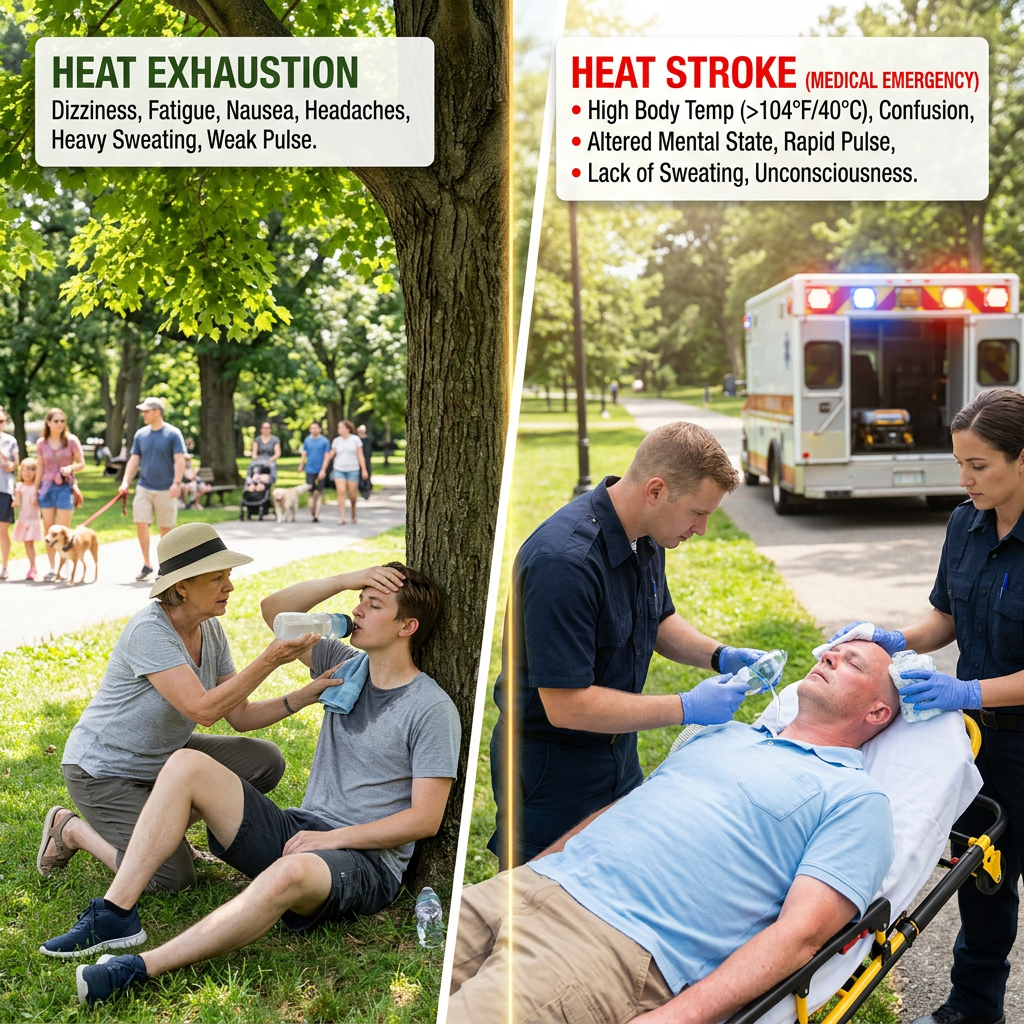
When the summer sun hits its peak, high temperatures can go from uncomfortable to dangerous in a matter of hours. The human body is incredibly efficient at cooling itself down, but under extreme heat or intense physical exertion, that internal cooling system can overload.
This overload typically leads to two distinct conditions: heat exhaustion and heat stroke.
While they sound similar, they are vastly different medical scenarios. One is a warning sign that your body is overheating; the other is a life-threatening medical emergency. Here is how to spot the difference and know exactly what to do.
What is Heat Exhaustion?
Heat exhaustion is your body’s response to an excessive loss of water and salt, usually through heavy sweating. Think of it as your body’s amber alert—a severe warning sign that you are pushing your system too hard in the heat.
The Warning Signs
If you or someone else is experiencing heat exhaustion, you will likely notice:
- Heavy sweating (the skin may feel cool and clammy)
- A fast, weak pulse
- Nausea, vomiting, or an upset stomach
- Dizziness, lightheadedness, or fainting
- Muscle cramps
- Headache and overwhelming fatigue
What to Do Immediately
Heat exhaustion can quickly turn into heat stroke if ignored. Take action right away:
- Move to a cooler place: Get into the shade or an air-conditioned room.
- Cool down the skin: Loosen tight clothing, apply cool, wet cloths to the body, or take a cool bath.
- Hydrate safely: Sip cool water or sports drinks. Do not chug them, and avoid alcohol or caffeine.
- Monitor closely: If symptoms worsen or don’t improve within an hour, seek medical help.
What is Heat Stroke?
Heat stroke is the most serious heat-related illness. It occurs when the body’s cooling system completely shuts down. The body’s core temperature skyrockets to 103°F (39.4°C) or higher within minutes, and the body loses its ability to sweat and cool down.
🚨 Crucial Note: Heat stroke is a severe medical emergency. Left untreated, it can cause permanent damage to the brain, heart, kidneys, and muscles, or even be fatal.
The Warning Signs
Look out for these severe red flags:
- High body temperature (103°F/39.4°C or higher)
- Altered mental state: Confusion, slurred speech, agitation, delirium, or seizures
- Hot, red, dry skin (or sometimes profuse sweating, especially during intense exercise)
- A fast, strong pulse
- Nausea and vomiting
- Loss of consciousness (fainting or coma)
What to Do Immediately
If you suspect someone has heat stroke, call 911 (or your local emergency number) immediately. While waiting for help to arrive:
- Move them to the shade or indoors.
- Cool them down rapidly by any means necessary: immerse them in a cool tub of water, douse them with a garden hose, sponge them with cool water, or place ice packs on their neck, armpits, and groin.
- Do NOT give them anything to drink. If they are confused or unconscious, they could choke.
At-a-Glance Comparison Chart
When you are out in the sun, you need to make decisions fast. Bookmark this simple guide to differentiate the two:
| Symptom / Action | Heat Exhaustion | Heat Stroke |
| Body Temperature | Normal or slightly elevated | 103°F (39.4°C) or higher |
| Skin Condition | Moist, clammy, and cool | Hot, red, dry (or damp) |
| Sweating | Heavy | Often stops sweating entirely |
| Pulse | Fast and weak | Fast and strong |
| Mental State | Tired, weak, or dizzy | Confused, slurred speech, unconscious |
| Immediate Action | Move to shade, cool down, sip water | Call 911 immediately, cool rapidly |
Tips to Prevent Heat Illness
The best way to handle heat exhaustion and heat stroke is to avoid them altogether. Keep these golden rules in mind during hot weather:
- Hydrate Early and Often: Don’t wait until you are thirsty to drink water. If you are sweating heavily, replace electrolytes with a sports drink.
- Dress Appropriately: Wear lightweight, light-colored, and loose-fitting clothing.
- Pace Yourself: Avoid intense outdoor activities during the hottest parts of the day (usually 10 AM to 4 PM).
- Never Leave Anyone in a Parked Car: Not even for a minute, and not even with the windows cracked. A car’s internal temperature can rise by 20 degrees in just 10 minutes.
- Check on the Vulnerable: Keep a close eye on infants, the elderly, and those with chronic medical conditions, as their bodies cannot regulate temperature as easily.
 APOMUDEN
Leave a comment