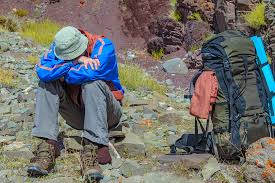
Altitude sickness sometimes called “mountain sickness,” is a group of symptoms that can strike if you walk or climb to a higher elevation, or altitude, too quickly. This condition typically occurs when the body is unable to acclimatize fast enough to the decreased oxygen levels found at higher altitudes, leading to a variety of physical reactions. Common symptoms include headaches, nausea, dizziness, and fatigue, which can range from mild to severe depending on the individual and the altitude attained.
It is crucial for climbers and hikers to be aware of the risks associated with rapid ascents, as altitude sickness can escalate into more serious conditions such as High Altitude Pulmonary Edema (HAPE) or High Altitude Cerebral Edema (HACE) if proper precautions are not taken. To mitigate these risks, it is recommended to ascend gradually, stay hydrated, and allow time for the body to adjust to changing elevations
How is Mountain Sickness Treated?
If you experience a headache and other symptoms of altitude sickness shortly after changing elevation, you may have altitude sickness. For mild symptoms, stay at your current altitude, rest, keep warm, and hydrate. Avoid ascending until symptoms resolve. For severe symptoms or if mild symptoms persist or worsen, descend to a lower elevation without exerting yourself and seek medical assistance.
A doctor may examine your chest and perform imaging tests to check for fluid. Treatment for High Altitude Cerebral Edema (HACE) may involve the steroid dexamethasone, while High Altitude Pulmonary Edema (HAPE) typically requires supplemental oxygen and possibly medications, in addition to moving to a lower altitude.
How Can Altitude Sickness Be Prevented?
- Begin your journey below 10,000 feet. If you need to go higher, acclimate for a day at a lower elevation first.
- Consider taking acetazolamide to help with acclimatization if you cannot stop at lower elevations.
- Ascend no more than 1,000 feet per day after 10,000 feet and rest a day for every 3,000 feet climbed.
- “Climb high and sleep low”: Return to a lower altitude to sleep if you climb over 1,000 feet in a day.
- Drink 3-4 quarts of water daily and ensure 70% of your calories are from carbs.
- Avoid tobacco, alcohol, and sleeping pills for the first 48 hours; caffeine is fine if you’re used to it.
- Do not engage in vigorous exercise for the first 48 hours.
- Recognize the signs of altitude sickness and move to a lower elevation if symptoms occur.
 APOMUDEN
Leave a comment