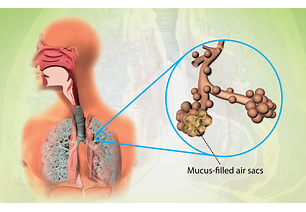
Pneumonia is caused by bacteria, viruses, or fungus in one or both lungs. The infection causes inflammation in the air sacs of the lungs, known as alveoli. The alveoli fill with fluid or pus, making breathing difficult.
Pneumonia types pneumonia
There are different type of pneumonia, depending on their cause.
- Bacterial pneumonia: The most common cause is the bacterium Streptococcus pneumoniae (S. pneumoniae), but many different bacteria can cause pneumonia
- Viral pneumonias; This is cause by syncytia virus (RSV) and influenza types A and B, known as the flu
- Aspiration pneumonia: This can happen when a person breathes food, liquids, or stomach contents into the lungs. This type is not contagious.
- Fungal pneumonia: This can results from a condition such as valley fever, caused by the Coccidioides fungus.
- Hospital-acquired pneumonia: This can occur in patients being treated for other conditions, for example, those attached to a respirator, or breathing machine.
Symptoms of Pneumonia
The earliest symptoms of pneumonia are often similar to those of a cold or flu. The individual subsequently develops a high temperature, chills, and a sputum-producing cough.
Common symptoms include:
- fever
- fast heartbeat
- fatigue and weakness
- nausea and vomiting
- cough
- headache
- rusty or green phlegm, or sputum, coughed up from lungs
- fast breathing and shortness of breath
- shaking chills
- confusion or delirium, especially in older adults
- chest pain that usually worsens when taking a deep breath, known as pleuritic pain
- sweating
- muscle pain
How is pneumonia treated?
Treatment depends on the type and severity of the pneumonia
- Bacterial types of pneumonia are treated with antibiotics
- Viral types of pneumonia are usually treated with rest and plenty of fluids. Antiviral medications can be used in influenza.
- Fungal types of pneumonia are usually treated with antifungal medications.
Pneumonia Complications
Even with treatment, some people with pneumonia, particularly those in high-risk groups, may develop complications such as:
Difficulty breathing. If your pneumonia is severe or you have chronic underlying lung diseases, you may have trouble breathing in enough oxygen. You may need to be hospitalized and use a breathing machine (ventilator) while your lung heals.
Pleural effusion. If your pneumonia isn’t treated, you may develop fluid around your lungs in your pleura, called pleural effusion. The pleura are thin membranes that line the outside of your lungs and the inside of your rib cage. The fluid may become infected and need to be drained
Bacteria in the bloodstream (bacteremia). Bacteria that enter the bloodstream from your lungs can spread the infection to other organs, potentially causing organ failure.
Organs damage. The Kidney, heart, and liver could be damaged if they don’t receive enough oxygen, or if there’s an overreaction of the immune system to the infection.
Prevention of pneumonia
- If you smoke, try to quit. Smoking makes you more susceptible to respiratory infections, especially pneumonia.
- Practice good hygiene. To protect yourself against respiratory infections that sometimes lead to pneumonia, wash your hands regularly or use an alcohol-based hand sanitizer
- Exercise, eat a well-balanced diet, and get enough sleep to keep your body healthy and better able to resist infection.
 APOMUDEN
Leave a comment